Coverage is only
the beginning.
A premium residential network considers capacity, wired infrastructure, wireless design, equipment locations, PoE, segmentation, reliability and future service.
Wi-Fi
Coverage where it matters.
Access point locations are planned around construction, materials, room use and expected device density rather than simply adding extenders.
Wired
Wire what should be wired.
High-bandwidth and fixed devices can benefit from structured connections that reduce dependence on wireless.
Core
Build the foundation.
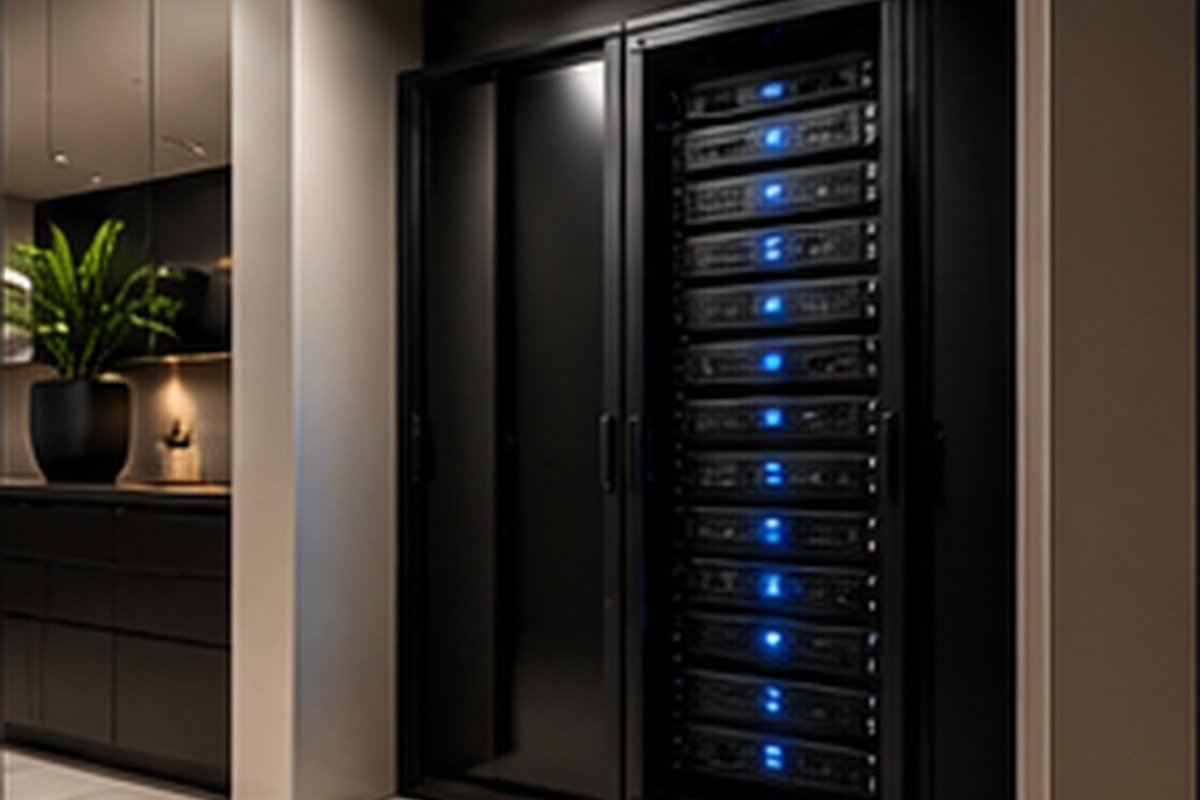
Routers, switching, PoE, uplinks and equipment environments are designed as a coherent network architecture.
Security
See what matters.
Surveillance and access systems can be integrated into the same broader technology environment where appropriate.
Reliability
Design for the real house.
Capacity and infrastructure are considered around the actual home, not a generic device count.
Service
Know what is happening.
Organization, labeling and documentation make diagnosis substantially easier when something eventually needs attention.